
How sales training can identify and fix the gaps between lead generation, qualification and conversion
The enquiries were coming in, the website was generating traffic, social media was attracting attention, and potential customers were filling out enquiry forms and picking up the phone. On paper, everything looked positive for this small business. But there was one problem, the sales weren’t following.
Despite having a steady stream of enquiries, the business was struggling to convert those opportunities into paying customers. The owner initially assumed the problem was the quality of the leads. Perhaps the marketing wasn’t attracting the right people. Maybe customers were too price-sensitive. Or perhaps the market had simply become more competitive.
But when the sales process was looked at more closely, something else became clear. The problem wasn’t necessarily the number of leads, it was what happened after the lead arrived.
Getting an enquiry is only the beginning
For many small businesses, generating enquiries feels like the hardest part of sales. You invest in marketing. You build your website, you post on social media, you network, you ask for referrals, you run advertising campaigns. Then the enquiries start coming in. But an enquiry is not the same thing as a sales opportunity.
A potential customer might be curious, comparing providers, looking for a price, researching their options or genuinely ready to buy. Without a strong qualification process, it can be difficult to know the difference. This is where sales training can make a significant difference. Rather than simply teaching people how to “close more sales”, effective sales training can help identify what is happening at every stage of the customer journey.
Where are the leads falling through the cracks?
There are usually three key stages to examine.
1. Lead Generation
Are you attracting the right people in the first place? A business can have hundreds of enquiries but still struggle to generate meaningful sales if those enquiries are coming from people who aren’t a good fit.
Sales and marketing need to work together to understand the ideal customer, their problems, their motivations and what makes them likely to buy. The goal isn’t necessarily to generate more leads, it is to generate better opportunities.
2. Qualification
Once an enquiry arrives, what questions are being asked? This is one of the areas where sales training can have an immediate impact. Instead of immediately talking about products, services and pricing, salespeople need to understand the customer’s situation.
Questions might include:
• What prompted you to contact us?
• What problem are you trying to solve?
• How are you currently managing this?
• What would you like to improve?
• What is important to you when choosing a provider?
• Who else is involved in the decision?
• What timeframe are you working towards?
Good qualification isn’t about interrogating the customer. It is about having a better conversation. The more effectively a salesperson understands the customer’s needs, the easier it becomes to determine whether there is a genuine opportunity and how the business can add value.
3. Conversion
Even when a lead is qualified and the customer is interested, the sale can still be lost.
Why?
• Sometimes the salesperson doesn’t clearly communicate the value.
• Sometimes they focus too heavily on features rather than outcomes.
• Sometimes they don’t address the customer’s concerns.
• And sometimes they simply don’t ask for the next step.
This last point is surprisingly common. A great sales conversation can finish with:
“I’ll send you some information and you can have a think about it.”
And then nothing happens.
A more effective approach is to establish a clear next step.
That could be arranging another meeting, sending a proposal, organising a demonstration or confirming a decision date. Salespeople shouldn’t simply hope the customer takes the next step. They should confidently guide them towards it.
Sales training should diagnose, not just teach
One of the biggest misconceptions about sales training is that it is simply about teaching people how to sell. For small businesses, effective sales coaching should go deeper. It should help identify where the sales process is breaking down.
• Are people responding to enquiries quickly enough?
• Are they asking enough questions?
• Are they speaking to the right decision-maker?
• Are they identifying genuine buying opportunities?
• Are they communicating value effectively?
• Are they following up consistently?
• Are they confident handling objections?
• Are they asking for the sale?
• Are opportunities being tracked through the sales pipeline?
These questions can reveal gaps that may otherwise remain hidden.
The problem might not be your leads
When sales aren’t where they should be, it is tempting to immediately blame marketing.
“We need more leads.”
But what if you already have enough?
If a business is generating 100 enquiries but only converting a small percentage, generating another 100 enquiries may simply create more work without solving the underlying problem.
Improving the way existing opportunities are handled could have a much greater impact. This is why sales training and coaching can be particularly valuable for small businesses. You don’t necessarily need a bigger sales team, you may need a better sales process and greater confidence within the existing team.
Small improvements can create significant results
Imagine a business receives 50 qualified enquiries each month. If it converts 10%, that’s five new customers. Improving the conversion rate to 15% would result in 7.5 customers from the same number of enquiries.
The business hasn’t necessarily spent more on marketing. It hasn’t hired another salesperson. It has simply become better at converting the opportunities it was already generating. That is the power of looking at the entire sales journey rather than focusing on one part of it.
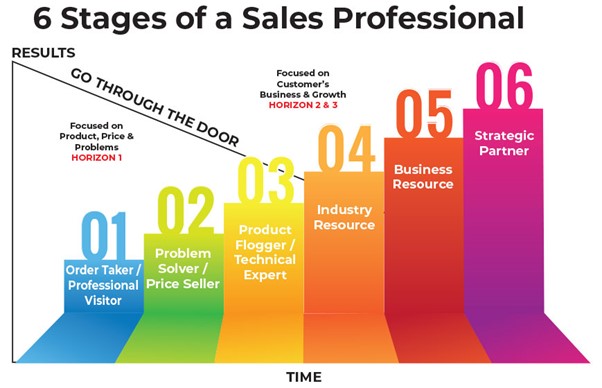
What does your sales process look like?
If your small business is generating enquiries but not converting enough of them, it may be time to look beyond lead generation.
Sales coaching can help you identify the gaps between enquiry, qualification, opportunity, proposal and conversion, giving you and your team practical strategies to improve each stage.
If you want to explore the role of structured sales conversations and techniques, read The Business Owner Who Didn’t Like Selling: Practical Sales Techniques for Non-Sales Professionals.
Ready to turn more enquiries into customers?
At Business Coaches Sydney, we provide tailored Sales Coaching designed specifically for small businesses. We work with business owners and sales teams to identify sales gaps, strengthen customer conversations, improve qualification and build practical strategies that help turn more opportunities into revenue.
If your business is getting the enquiries but losing the sale, it may not be time to generate more leads. It may be time to improve what happens next.
Contact Business Coaches Sydney today to discuss tailored Sales Coaching for your small business.
Call 1300 833 574 or Email info@businesscoachessydney.com.au
Author – Garret Norris – https://www.linkedin.com/in/garretnorris/

Latest posts by Sienna Anderson (see all)
- There’s Still Time to Finish the Year Strong - October 20, 2026
- The Difference Between Running a Business and Building a Business - October 12, 2026
- Why customer retention deserves more attention from small businesses - October 6, 2026