

How sales training helps growing businesses build a repeatable sales process instead of relying on individual salespeople
At first, everything looked like it was going right. The business was growing. Enquiries were increasing, new customers were coming through the door and revenue was heading in the right direction. The owner was busy, the team was expanding and there was a genuine sense of momentum.
But then something started to become obvious. When the best salesperson was away, sales slowed down.
When a new salesperson joined, it took months before they became productive. Different team members handled enquiries differently. Some followed up religiously, while others assumed the customer would call back. One salesperson was excellent at asking questions, another jumped straight into talking about the product, and another relied almost entirely on price.
The business had grown, the sales process hadn’t
This is a common challenge for growing small businesses. What worked when the business was smaller often relied heavily on the experience, personality and instincts of the owner or a few key salespeople. As the business grows, that approach becomes difficult to sustain.
When Sales Success Lives in One Person’s Head
Many small businesses who engage with us don’t actually have a defined sales process. They have experienced salespeople. There is an important difference.
An experienced salesperson may instinctively know which questions to ask, when to follow up, how to handle objections and when to ask for the sale. But if those skills have never been documented, taught or shared with the wider team, the business becomes dependent on that individual. That creates risk.
• What happens when they leave?
• What happens when you hire three new salespeople?
• What happens when the business enters a new market?
• What happens when the owner can no longer personally oversee every opportunity?
Growth requires the business to move from individual sales ability to organisational sales capability.

A Repeatable Sales Process Creates Consistency
A strong sales process gives everyone a clear pathway to follow. It might include stages such as:
• Prospecting and identifying suitable opportunities
• Qualifying leads
• Asking effective questions
• Understanding customer needs and challenges
• Presenting relevant solutions
• Communicating value
• Handling objections
• Following up consistently
• Asking for the next step
• Maintaining the customer relationship
The exact process will be different for every business. The important thing is that it is intentional, understood and repeatable. Sales training can help turn that process into practical skills that your team can actually use. Rather than simply telling salespeople what to do, effective training gives them opportunities to practise conversations, explore real customer scenarios, understand where opportunities are being lost and develop a consistent approach.
Training Shouldn’t Create Robots
A repeatable process doesn’t mean every salesperson should sound exactly the same. Customers can tell when someone is simply reading from a script. Good sales training provides a framework while still allowing people to bring their own personality and experience to the conversation.
For example, the process might require every salesperson to properly understand the customer’s needs before presenting a solution. How they achieve that can be different. One salesperson might naturally use conversational questions. Another might use a more structured discovery process. Another might rely on detailed industry knowledge.
The outcome is the same: the customer feels understood, the salesperson identifies the opportunity and the conversation moves forward with purpose.
The Real Benefit Is Bigger Than More Sales
Sales training is often associated with one objective: increasing sales, and that is certainly important. But for a growing small business, the benefits can go much further. A structured sales approach can help create:
Greater consistency
Customers receive a more consistent experience regardless of who they speak with.
Faster onboarding
New salespeople have a clear framework to learn rather than simply being told to “watch how John does it.”
Better forecasting
When opportunities move through defined stages, it becomes easier to understand what is really happening in the pipeline.
Less reliance on individual performers
The business owns the sales process rather than leaving critical knowledge with one person.
Greater confidence
Salespeople know what to do next and have practical techniques for managing different customer conversations.
Scalable growth
The business has a sales approach that can evolve as the team and customer base grow.
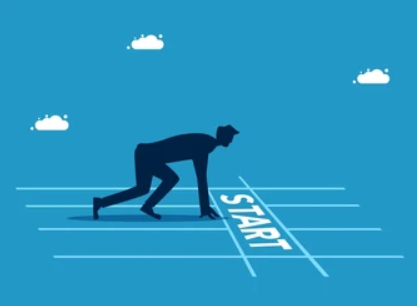
Start With What Is Already Working
The answer isn’t necessarily to throw out everything the business currently does. In fact, the best place to start is often with the salespeople who are already achieving strong results.
• What do they do differently?
• What questions do they ask?
• How do they qualify opportunities?
• How do they establish value?
• How do they handle objections?
• How frequently do they follow up?
• How do they know when a customer is ready to buy?
Sales training can help uncover these successful behaviours and turn them into a process that the wider team can learn and apply. That is where training becomes more than a one-day workshop. It becomes an opportunity to capture knowledge, build capability and create a more consistent sales culture.
Growth Shouldn’t Make Sales More Complicated
A growing business doesn’t necessarily need a bigger, more complicated sales process. It needs a better one. The goal is to create enough structure that salespeople know what good looks like, while keeping enough flexibility to have genuine conversations with customers. And as the business continues to grow, the process can be measured, refined and improved.
For small businesses that are ready to take sales more seriously, this can be a significant shift. Instead of asking, “Who is our best salesperson?”
The question becomes:
“What does our business do consistently that helps us win customers?”
That is the difference between relying on individual salespeople and building a sales capability that can support sustainable growth.

Want to Strengthen Your Sales Process?
If your business is growing but your sales approach still relies heavily on individual people, it may be time to build a more consistent and repeatable sales process.
Business Coaches Sydney provides tailored Sales Training for small businesses, helping business owners and teams develop practical sales skills, improve customer conversations and create approaches that support sustainable growth.
For another practical look at developing sales capability, read our article: The Month Sales Suddenly Slowed Down – What small business owners should check before placing blame.
Ready to build a stronger sales process? Contact Business Coaches Sydney to discuss tailored Sales Training for your small business.
Call 1300 833 574 or Email info@businesscoachessydney.com.au
Author – Garret Norris – https://www.linkedin.com/in/garretnorris/

Latest posts by Sienna Anderson (see all)
- There’s Still Time to Finish the Year Strong - October 20, 2026
- The Difference Between Running a Business and Building a Business - October 12, 2026
- Why customer retention deserves more attention from small businesses - October 6, 2026